Veganism
"But Where Do You Get Your Protein?" Answering with Love
The question every vegan hears. Here's the real answer, and how to share it with warmth instead of a fight.
Ah, the Famous Question!
If you've been vegan for more than five minutes, chances are someone has asked you the question: "But where do you get your protein?"
Usually at dinner from someone who doesn't really know much about nutrition, or protein for that matter.
After more than 22 years of being vegan, I've certainly heard this question more times than I can count. And while it can get a little repetitive, I try to remember that most people are genuinely curious. We've been taught for generations that meat, eggs, and dairy are our primary sources of protein, so the idea of getting everything we need from plants can seem unfamiliar. (I personally consider this a result of direct brainwashing from the meat and dairy industries. This is how they sell to the masses. And it's worked!)
But here's the beautiful truth: protein isn't exclusive to animal products. It's found throughout the plant kingdom, in abundance!
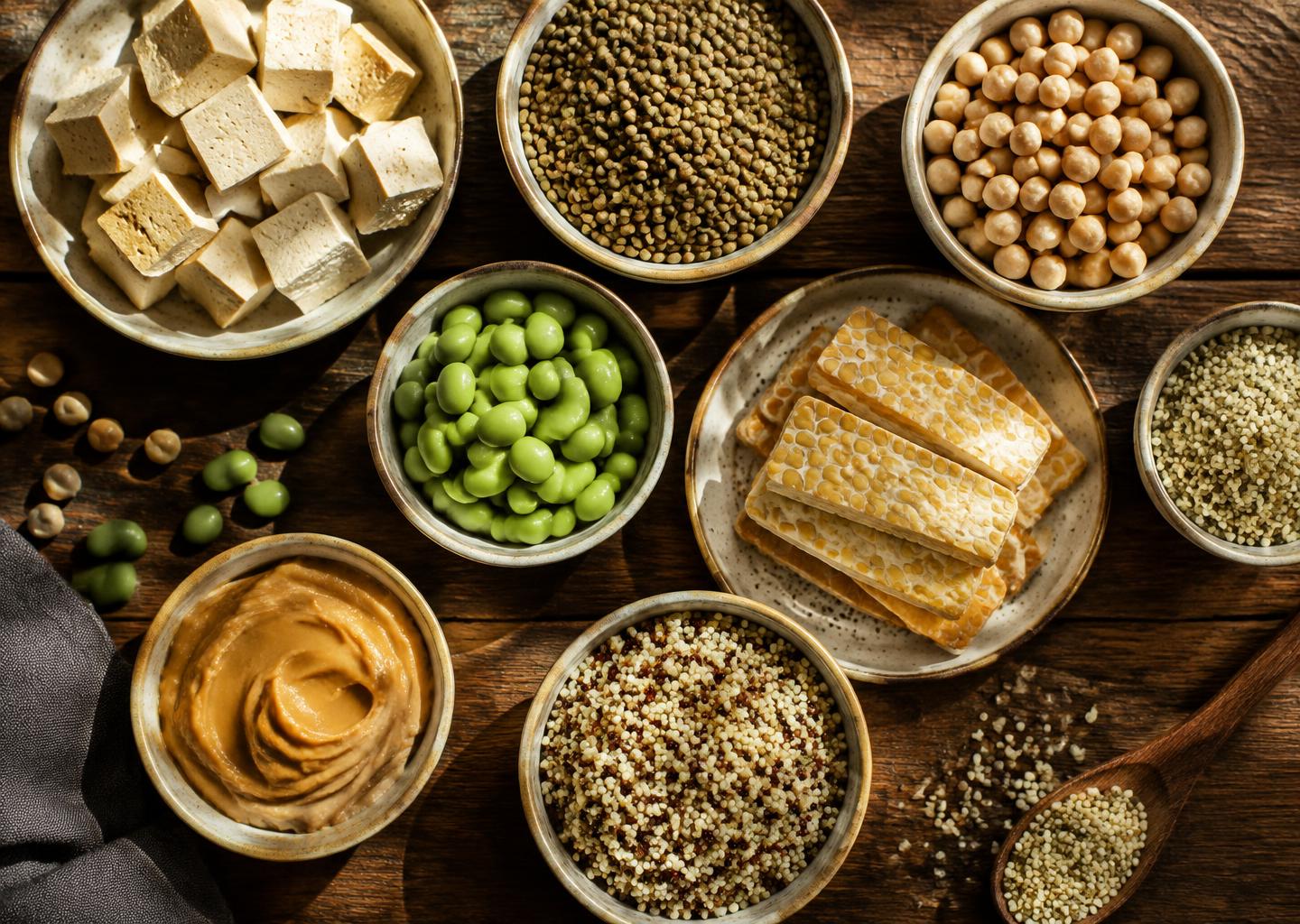
From lentils and chickpeas to tofu, tempeh, nuts, seeds, and whole grains, Mother Earth provides us with delicious protein-rich foods.
And once you understand a little about nutrition, you'll discover that meeting your protein needs on a vegan diet can be wonderfully simple.
What Is Protein, and Why Do We Need It?
Protein is one of the three macronutrients our bodies need, alongside carbohydrates and fats.
It's made up of amino acids, which are essential for building and repairing tissues, maintaining muscles, supporting immune function, producing enzymes and hormones, and keeping our bodies functioning beautifully.
There are 20 amino acids commonly used to build proteins in the human body. Nine are considered essential, meaning we need to obtain them through our diets.
And yes, we can obtain all nine essential amino acids from plants!
One of the biggest misconceptions about vegan nutrition is that plant proteins are somehow incomplete or inadequate. This couldn't be further from the truth! While individual plant foods contain different proportions of amino acids, a varied vegan diet can provide all the essential amino acids our bodies need.
Some plant foods, including soybeans, quinoa, and buckwheat, contain all nine essential amino acids in useful proportions.
And contrary to what you might have heard, you don't need to carefully combine different plant proteins at every meal.
Our bodies maintain amino acid pools and use amino acids from the foods we eat throughout the day. Eating a variety of legumes, grains, nuts, seeds, and vegetables generally makes meeting our amino acid needs quite manageable.
How Much Protein Do You Actually Need?
This is where things become interesting, because protein requirements vary depending on your body size, activity level, age, and individual health needs.
The standard Recommended Dietary Allowance (RDA) for generally healthy adults is approximately 0.8 grams of protein per kilogram of body weight per day.
That's a baseline recommendation intended to meet the needs of most healthy adults, rather than an ideal target for every lifestyle.
For vegans, aiming around 1.0–1.2 grams per kilogram can be a practical approach, particularly when eating a variety of whole plant foods. People who regularly strength train, participate in endurance sports, or are working to build muscle may benefit from higher amounts, often around 1.2–2.0 grams per kilogram depending on their training and goals.
Here's what that might look like:
| Body Weight | Basic Needs | Active Lifestyle | Muscle Building |
|---|---|---|---|
| 100 lb | 36 g | 55–75 g | 75–100 g |
| 110 lb | 40 g | 60–80 g | 80–110 g |
| 120 lb | 43 g | 65–90 g | 90–120 g |
| 130 lb | 47 g | 70–95 g | 95–130 g |
| 140 lb | 50 g | 75–100 g | 100–140 g |
| 150 lb | 54 g | 80–110 g | 110–150 g |
| 160 lb | 58 g | 90–115 g | 115–160 g |
| 170 lb | 61 g | 95–125 g | 125–170 g |
| 180 lb | 65 g | 100–130 g | 130–180 g |
| 190 lb | 68 g | 105–140 g | 140–190 g |
| 200 lb | 72 g | 110–145 g | 145–200 g |
Your needs may be different depending on your health, activity level, and goals.
And please don't feel pressured by the enormous amounts of protein constantly promoted on social media. More isn't automatically better, and nutrition is about nourishing our whole bodies rather than obsessing over a single number.
The Best Plant-Based Sources of Protein
Let's explore some of my favorite protein-rich foods.
One of the things I adore about plant-based nutrition is that so many protein sources also come with fiber, vitamins, minerals, and beneficial plant compounds.
Protein-Rich Plant Foods
| Food | Approximate Protein |
|---|---|
| Seitan, 100 g | 20–25 g |
| Tempeh, 100 g | 19–20 g |
| Firm tofu, 100 g | 12–20 g |
| Edamame, 1 cooked cup | 18 g |
| Lentils, 1 cooked cup | 18 g |
| Chickpeas, 1 cooked cup | 14–15 g |
| Black beans, 1 cooked cup | 15 g |
| Kidney beans, 1 cooked cup | 13 g |
| Hemp hearts, 3 tablespoons | 10 g |
| Pumpkin seeds, ¼ cup | 8–10 g |
| Peanut butter, 2 tablespoons | 7–8 g |
| Quinoa, 1 cooked cup | 8 g |
| Oats, ½ cup dry | 5 g |
| Broccoli, 1 cooked cup | 4 g |
*Values are approximate and vary by brand, preparation, and serving size.*
Tofu and Tempeh
If there's one thing I'd love more people to discover, it's how incredibly versatile tofu can be!
Tofu is made from soybeans and can be transformed into everything from crispy savory bites to creamy sauces, scrambles, desserts, and beautiful stir-fries.
Tempeh is another wonderful soy-based food, made from fermented soybeans. It has a firmer texture and a slightly nutty flavor that works beautifully in marinades, sandwiches, and grain bowls.
Soy is also one of the most thoroughly studied plant proteins. Despite persistent myths, moderate consumption of traditional soy foods is considered safe for most people, and research doesn't support the common claim that soy foods feminize men or disrupt hormones in the way they're often portrayed online.
I love how much nourishment we can get from such humble ingredients.
Beans, Lentils, and Legumes
Lentils and beans are some of the most affordable, accessible, and nourishing foods on the planet. They're rich in protein, fiber, iron, folate, and other important nutrients.
I love adding lentils to soups, curries, and pasta sauces, blending chickpeas into hummus, and using black beans in tacos, burritos, and nourishing bowls.
And if you're transitioning to veganism on a budget, legumes are your best friends. Dried beans and lentils can be especially economical, while canned varieties are wonderful for quick meals. Just rinse them, season them beautifully, and enjoy.
Nuts and Seeds
Hemp hearts, pumpkin seeds, peanuts, almonds, chia seeds, and sunflower seeds all contribute protein to our diets. They're also delicious ways to add texture, flavor, and nourishing fats to meals.
I love sprinkling hemp hearts over salads, adding nut butter to smoothies, and finishing a bowl of oatmeal with seeds and fresh fruit.
While nuts and seeds are nutritious, they're generally more concentrated sources of fat than protein, so I prefer thinking of them as wonderful additions to meals rather than relying on them as my main protein source.
Whole Grains
Yes, grains contain protein! Quinoa, oats, buckwheat, whole wheat, brown rice, and other grains all contribute to our daily intake. And when you enjoy them alongside legumes, vegetables, nuts, and seeds, the protein adds up beautifully throughout the day.
Can You Build Muscle on a Vegan Diet?
Absolutely!!! And some of the strongest, fastest, and most accomplished athletes in the world are living proof.
This is one of those misconceptions that I would absolutely love to see disappear forever. The idea that we need to eat animals to build muscle has been repeated so often that people rarely stop to question whether it’s actually true. Yet the world of professional athletics is filled with extraordinary examples of people achieving incredible strength, speed, endurance, and physical performance while eating plant-based diets.
In my early twenties, about six years into my vegan journey, I competed in bodybuilding. I was building muscle, training intensely, and pushing my body physically, all while eating an entirely vegan diet. More than two decades into this lifestyle, I’ve never experienced a nutritional deficiency caused by my diet, and I have my nutrient levels checked every six months. I also know many vegan bodybuilders personally, and today, a quick online search will introduce you to an entire community of plant-powered athletes proudly sharing what’s possible.
One documentary I highly recommend watching is The Game Changers. If you’ve ever believed that eating meat is necessary for building muscle, developing strength, or performing at your physical best, I encourage you to watch it with an open mind. It’s one of the most fascinating explorations of plant-based nutrition and athletic performance, featuring world-class athletes, medical professionals, scientists, and researchers who challenge some of our most deeply ingrained beliefs about food.
Its producer and narrator, James Wilks, is a professional mixed martial artist, winner of The Ultimate Fighter, and combat instructor who trained elite military personnel. Like so many athletes, he grew up believing animal protein was essential for strength and performance. But after suffering an injury, he began researching nutrition to support his recovery and came across something that completely challenged his understanding of what makes a person strong.
Ancient Roman gladiators, some of history’s most formidable fighters, ate plant-based diets!
Historical accounts even referred to gladiators as hordearii, meaning “barley eaters.” These warriors, whose lives depended on physical strength and endurance, were fueling themselves with plants. That discovery inspired Wilks to embark on a five-year journey investigating the relationship between nutrition, athletic performance, and human health, eventually leading to The Game Changers.
And the athletes featured in the documentary are extraordinary. There’s Patrik Baboumian, a vegan strongman and former Germany’s Strongest Man titleholder who has set strength records. Then there’s Morgan Mitchell, an Australian Olympic sprinter and two-time national 400-meter champion who embraced plant-based eating while competing at an elite level. Scott Jurek, one of the most accomplished ultramarathon runners in history, has won some of the world’s most grueling endurance races while following a vegan diet. Dotsie Bausch, an Olympic silver medalist and multiple-time U.S. national cycling champion, has spoken passionately about how plant-based nutrition supported her athletic career.
The documentary also features Kendrick Farris, an American record-holding weightlifter and three-time Olympian, along with professional bodybuilders including Nimai Delgado, whose physique alone challenges the tired stereotype that vegans can’t build impressive muscle.
And these are only a handful of examples. There's many Olympic athletes, record-breaking strongmen, professional fighters, competitive bodybuilders, and world-class endurance runners. People who have dedicated their lives to pushing the limits of human physical performance, all demonstrating how far we can go on a compassionate diet.
For anyone interested in building muscle, plant-based foods such as tofu, tempeh, seitan, edamame, lentils, beans, soy milk, and protein-rich grains can make it easy to create satisfying meals that support strength and recovery. With thoughtful meal planning, athletes with high protein requirements can meet their nutritional needs entirely through plants.
Do Vegans Need Protein Powder?
Protein powder can definitely be useful, especially for athletes, bodybuilders, and anyone with higher protein requirements, but it’s entirely possible to meet your daily protein needs through a varied vegan diet.
Personally, I love how many wonderful plant-based protein options are available today. We have protein powders made from peas, soy, hemp, brown rice, pumpkin seeds, and carefully formulated blends, making it incredibly convenient to add extra protein to smoothies, oatmeal, pancakes, waffles, and even baked goods.
For someone who’s training intensely, trying to build muscle, or simply looking for a convenient way to increase their protein intake, a good-quality vegan protein powder can be a delicious addition to their routine. I appreciate products with straightforward ingredient lists, meaningful amounts of protein per serving, and independent testing for quality.
But I also love reminding people just how much protein is naturally available in everyday plant foods! A delicious tofu scramble, a hearty lentil curry, a bowl of edamame, or a nourishing tempeh stir-fry can all contribute substantial amounts of protein while providing fiber, minerals, and other beneficial nutrients.
The beauty of plant-based nutrition is the abundance of options.
What I Eat to Get Enough Protein
I think one of the easiest ways to understand plant-based protein is to see how naturally it fits into everyday meals.
Here's an example of a delicious vegan day that provides plenty of protein without needing to eat enormous quantities of food.
Breakfast: Creamy Protein Oats
Oatmeal made with oat milk, topped with hemp hearts, peanut butter, berries, and cinnamon. OR yummy protein pancakes/waffles made from my high protein batter (blended oats and sometimes added protein powder)
25 g or more protein,.
Lunch: Mediterranean Chickpea & Quinoa Bowl
A beautiful bowl of quinoa, chickpeas, fresh vegetables, leafy greens, lemon, herbs, and a tahini dressing.
20–25 g protein.
Afternoon Snack: Edamame
A serving of lightly salted edamame, perhaps with a squeeze of fresh lemon.
12–18 g protein.
Dinner: Crispy Tofu with Vegetables
Crispy tofu served with rice, broccoli, and a delicious ginger-garlic sauce.
25–30 g protein.
That's roughly 82–98 grams of protein in one day, depending on the ingredients and serving sizes.
Of course, these are simply examples. Your meals should reflect your appetite, energy needs, personal preferences, and lifestyle.
But Isn't Animal Protein Better?
This is where I think it's important to look at the bigger picture. Animal proteins are often described as superior because many contain high proportions of essential amino acids. But nutritional quality isn't determined by protein alone. When we eat, we're consuming an entire package of nutrients and other compounds.
Beans, lentils, nuts, seeds, and whole grains provide protein alongside fiber and a variety of vitamins, minerals, and beneficial plant compounds. Most unprocessed animal foods contain no dietary fiber. And fiber is something many people eating a typical Western diet aren't getting enough of!
A diet rich in whole plant foods is associated with better cardiovascular health, improved cholesterol levels, and a lower risk of several chronic diseases.
Heart disease remains the leading cause of death in America, and meat is a main contributor to heart disease. It clogs arteries. Processed meat is also classified as carcinogenic to humans by the World Health Organization.
Really, consider that information.
Common Myths About Vegan Protein
Myth: You Have to Combine Proteins at Every Meal
Nope! This idea became popular decades ago, but we now understand that eating a variety of plant foods throughout the day can provide the essential amino acids our bodies need.
Myth: Vegans Are Protein Deficient
A well-planned vegan diet can provide adequate protein for people at many different life stages and activity levels. That said, simply removing animal products doesn't automatically create a balanced diet. It's important to eat enough food and include reliable sources of protein, along with other essential nutrients.
Myth: Soy Is Bad for Your Hormones
Soy contains compounds called isoflavones, which are phytoestrogens. These aren't the same as human estrogen, and their effects in the body are different.
Actual research on soy food consumption hasn't supported many of the alarming claims circulating online.
For most people, tofu, tempeh, edamame, and soy milk can be nutritious additions to a balanced diet.
Myth: You Need Meat to Be Strong
Strength comes from appropriate training, sufficient nutrition, and recovery, not from one particular food. Plant-based diets can support muscle development and athletic performance when they're planned to meet energy and protein needs.
How to Answer the Protein Question with Love
After more than two decades of veganism, I've learned that you don't always need to turn a conversation about food into a nutritional lecture. Sometimes the simplest answer is the most powerful.
"Oh, lots of places! Lentils, tofu, tempeh, chickpeas, beans, nuts, seeds. Actually, would you like to try a bite?" ;)
I've found that sharing delicious food often opens people's minds far more effectively than arguing. When someone tastes an incredible plant-based meal, their perception of veganism can begin to shift. Suddenly, it doesn't seem restrictive or unfamiliar. It becomes something abundant, flavorful, and genuinely enjoyable. And I think that's one of the most beautiful ways we can inspire compassionate change.
We don't need to convince everyone in a single conversation. We can live our values, share what we've learned, and invite others to experience the possibilities.
Nourishing Our Bodies, Honoring All Life
Veganism has never been simply about removing animal products from my plate. It's about recognizing that the lives of ALL other beings matter, and choosing to extend compassion wherever I can. I don't want to end my time here on Earth knowing that I contributed to more environmental damage and suffering, I want to know I did the best I could have here.
The plant kingdom offers us an endless abundance of foods that can support our strength, energy, vitality, and long-term well-being.
So the next time someone asks where you get your protein, smile. You've got an entire kingdom of nourishment to choose from. And perhaps invite them over for dinner! 🩷
Helpful Resources
- NutritionFacts.org — Research-based information on plant-based nutrition and health.
- The Vegan Society — Vegan nutrition and lifestyle guidance.
- VeganHealth.org — Detailed information about essential nutrients on vegan diets.
- USDA FoodData Central — Explore the nutritional content of individual foods.
- The Game Changers — The powerful documentary about plant-based athletes and strength, well worth a watch.
Sources & further reading
Enjoyed reading?
Join my inner circle for new recipes, rituals and personal love letters.