Recipes
Vegan Pani Puri
Crisp puri shells filled with potato and chickpea, then drowned in icy mint-tamarind water. A vegan pani puri night, made with store-bought shells.
Jump to recipe ↓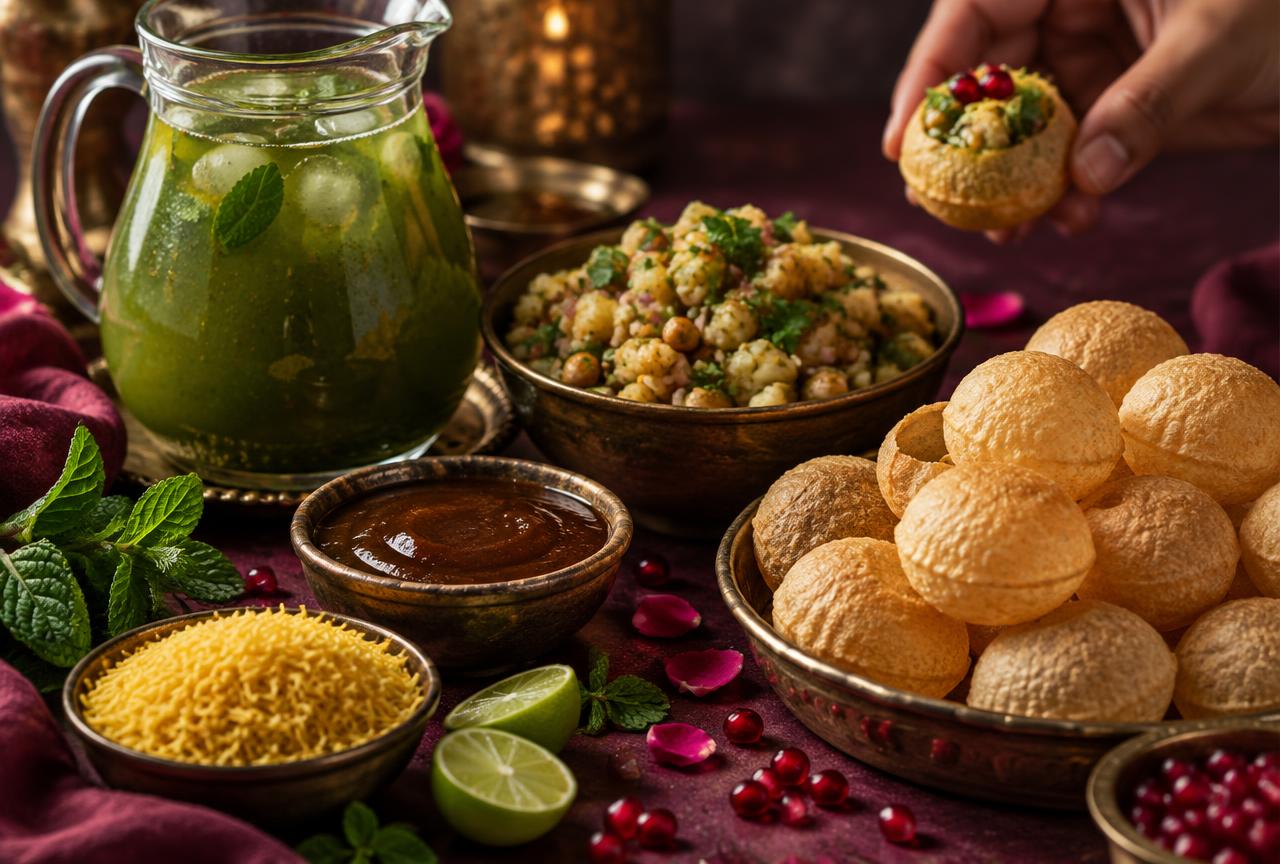
Street food at your own table
Beautiful soul, this is one of those foods that feels like a celebration even when it is just a regular Tuesday. You crack a little hole in a crisp shell, tuck in the potato and chickpea, add a drizzle of tamarind, then pour in the icy mint water and eat the whole thing in one go. Mmmm. One more, and then one more.
Take your time preparing the filling and pani. The shells come from a packet or the freezer, so there is no dough to roll and no oil to heat. Set a bowl in the middle of the table and let everyone build their own.
A little history of pani puri
Pani puri is one of India's most beloved street foods, and it goes by many names. In the north it is golgappa, in Bengal it is puchka, and across the west, pani puri. Crisp, hollow shells, a spiced potato and chickpea filling, and that icy, sour, spicy water. Pani means water, puri means the little fried shell. Together they are pure joy!
Its roots reach back centuries on the Indian subcontinent. One beloved legend ties it to the Mahabharata, where Draupadi is said to have created it from a handful of leftover dough and potato to feed the Pandavas, a dish born from making something magical out of almost nothing.
I first tasted pani puri in South India, and I still remember that first bite. The crackle of the shell, the rush of cold mint water, the heat and the sourness all at once. It's the dish that made me fall in love with Indian street food, and bringing it into my own kitchen felt like carrying a little piece of that experience home with me.
The water is the magic
Pani means water, and this is where the party is. Mint, cilantro, green chili, ginger, tamarind, roasted cumin and a little black salt, blended until very smooth and then strained. It comes out icy, sour, spicy and a little salty all at once, which is exactly what you want against a plain, crunchy shell.
Make it a bit ahead and keep it over ice. It tastes better after resting, and the mint deepens. If you like more heat, add another chili. If you like more sweetness, a small spoon of date syrup in the chutney does it beautifully.
A little nourishment in the bowl
Potato and chickpeas give you carbs, plus fiber, folate, potassium, plant protein and iron. Mint, lime and chili bring brightness rather than bulk.
Assemble one at a time
Puris soften within seconds of meeting the water, so build them one at a time rather than plating a whole round. Warm frozen shells in a dry pan first so they are properly crisp, and keep the jug of pani sitting in a bowl of ice.
Taste the water before guests arrive, then let everyone dunk their own. Enjoy!
The recipe
Vegan Pani Puri
- Serves
- 4
- Prep
- 25 minutes
- Cook
- 10 minutes
- Chill
- 0.5 hours
Ingredients
- For the mint water (pani):
- 1 cup loosely packed fresh mint leaves
- ½ cup loosely packed fresh cilantro
- 1 to 2 green chilies, stems removed, more or less to taste
- 1 tablespoon peeled fresh ginger, grated
- 3 tablespoons tamarind paste or concentrate, plus more to taste
- 1½ teaspoons roasted cumin powder
- ½ teaspoon black salt (kala namak), plus more to taste
- ½ teaspoon fine sea salt, or to taste
- ¼ teaspoon cayenne pepper, optional
- Juice of 1 lime, plus more to taste
- 6 cups cold water, divided, plus ice to serve
- For the filling:
- 3 medium potatoes (about 500 g), boiled until tender, cooled and peeled
- 1 can (400 g) chickpeas, drained and rinsed, about 240 g drained
- 1 teaspoon roasted cumin powder
- ½ teaspoon black salt (kala namak)
- ¼ teaspoon cayenne pepper, optional, for a little warmth
- 3 tablespoons fresh cilantro, finely chopped
- Fine sea salt, to taste
- To serve:
- 24 store-bought vegan puri or golgappa shells, packaged or frozen
- ½ cup tamarind-date chutney, store-bought or blended from 3 tablespoons tamarind paste and 4 pitted dates with a little water
- ½ cup sev, crispy chickpea flour noodles
- Pomegranate seeds and cilantro leaves, optional, for a delicious finish
Method
- Blend the pani: mint, cilantro, green chilies, ginger, tamarind paste, roasted cumin, black salt, sea salt, optional cayenne, lime juice and 1 cup of the water in a blender until very smooth, 45 to 60 seconds. Pour through a fine sieve into a jug, pressing with a spoon to get all the green goodness out.
- Stir the remaining 5 cups of cold water into the strained pani. Taste it, then adjust: more tamarind for sour, more chili for heat, more black salt for that street taste. Chill for at least 30 minutes, and keep it sitting over ice while you serve.
- Mash the boiled potatoes in a bowl until mostly smooth with a few chunks left. Add the drained chickpeas and crush them roughly with a fork or potato masher, you want texture rather than a paste.
- Stir the cumin, black salt, optional cayenne and chopped cilantro through the filling, then salt to taste. Taste it the way you would taste a filling, it should be well seasoned and a little spicy. Refrigerate until needed.
- If using frozen puris, warm them in a dry pan over medium heat or in the oven according to the package so they are crisp and hot, usually a few minutes. Packaged shells are fine as they are. Make the quick chutney if you want it: blend the tamarind paste, pitted dates and 3 to 4 tablespoons water until smooth.
- To eat, crack a thumb-sized hole in the top of each puri. Tuck in a small spoon of filling, add a little drizzle of chutney and a pinch of sev, then pour in or dunk into the icy pani and eat it whole, right away. Makes about 24 puris, roughly 6 per person.
Notes & storage
Store-bought shells save a preparation step. Most packaged and frozen puris are made from semolina, oil and salt, but some contain ghee or milk powder, so check the label for a vegan one. Sev and boondi are usually chickpea flour, yet some brands fry them in ghee.
Store the pani and the filling separately in sealed containers in the refrigerator for up to 2 days, the pani may settle so stir it before serving. Keep the shells airtight at room temperature and re-crisp them if they've gone a little chewy.
Allergens: gluten from the semolina shells, and legumes from the chickpeas. Nut-free as written, but check packaged items for shared-factory warnings.
Enjoyed reading?
Join my inner circle for new recipes, rituals and personal love letters.