Recipes
Traditional-Style Vegan Pad Thai
Tamarind tang, golden tofu, slippery rice noodles and a beautiful peanut crunch. A vegan adaptation that keeps the heart of pad Thai's sweet-sour-salty balance.
Jump to recipe ↓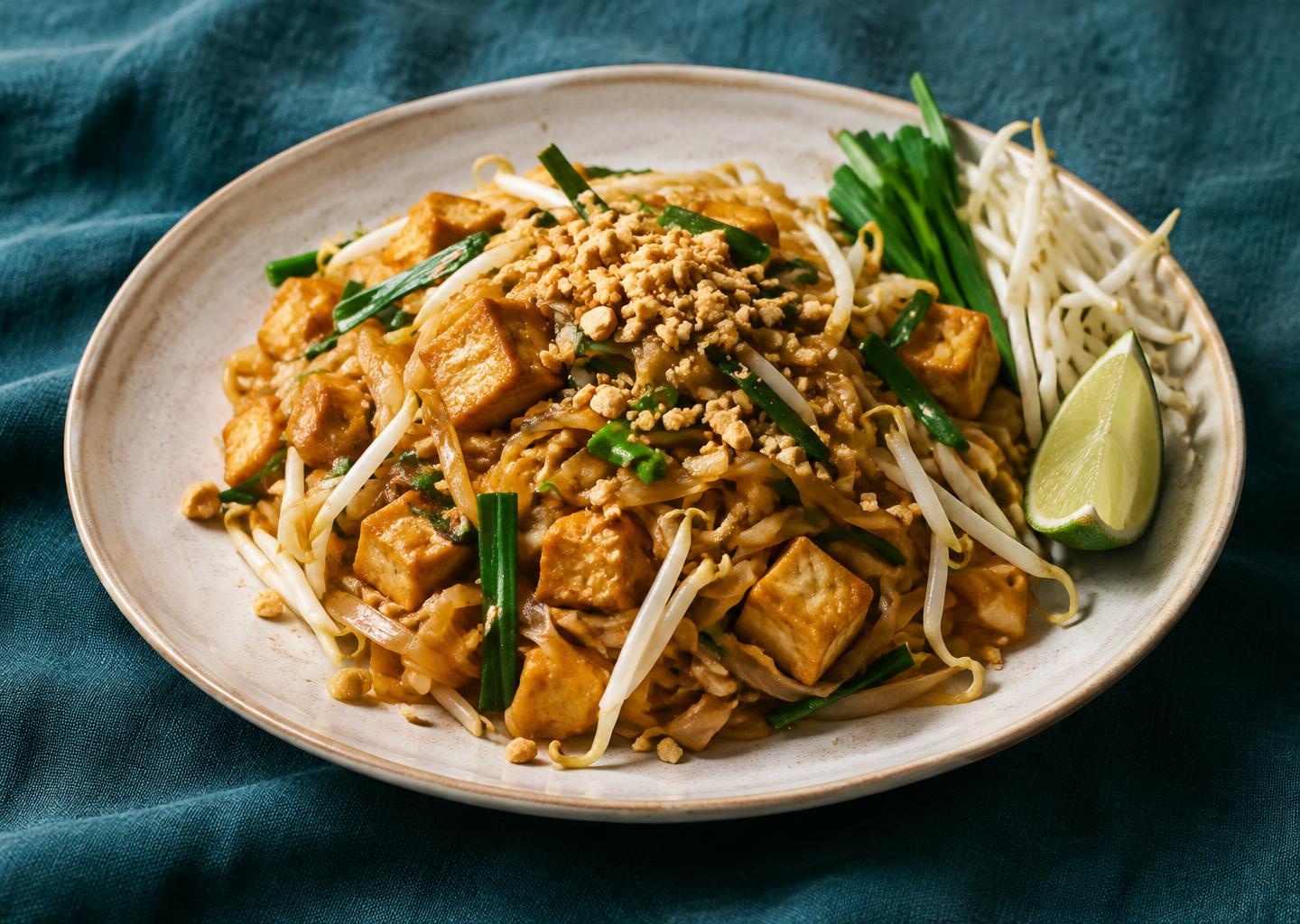
Tangy, tender, a little irresistible
Some of my most vivid travel memories are tied to noodles, steam rising from a street stall, the hiss of a hot wok, everyone crowded close, eating with their whole bodies. This is my plant-based love letter to those nights.
There is something so sensual about a bowl of noodles: the tamarind tang, the soft strands, the crunch of peanuts, the squeeze of lime at the table. Mmmm. I want dinner to be something we actually savor, not rush past on the way to the next thing.
Traditional pad Thai commonly includes fish sauce, egg and sometimes dried shrimp. This is a vegan adaptation, not a claim that those ingredients were never part of the dish. We keep the tamarind, palm sugar, rice noodles, tofu, bean sprouts and garlic chives, and use a vegan fish-sauce alternative. No ketchup, no peanut-butter sauce, just that lovely sweet-sour-salty balance.
A generous plant-protein dinner
Tofu is the main vegan protein here, with a little more from the peanuts. Rice noodles are mostly our carbohydrate source: they bring energy and that gorgeous texture, but are not the protein centerpiece. I like building a plate that actually satisfies me, beautiful soul.
Tofu can contribute iron and, depending on its coagulant and label, calcium. Bean sprouts and chives add vegetables; a side of lightly cooked broccoli or red pepper brings more variety and vitamin C. This dish alone is not a dependable B12 source. Across your day, fortified foods or a suitable supplement plan still matter.
Love your noodles, do not overcook them
Soak dried noodles until flexible but still firm, following your brand's soaking directions. They finish cooking in the pan. Boiling them until fully soft first is the quickest route to a sticky tangle. Have everything chopped and the sauce mixed before the heat goes on.
Tamarind strength varies wildly. Use regular, pourable tamarind cooking paste or prepared tamarind pulp here, not a super-concentrated extract. Taste the sauce before it meets the noodles. If your skillet is small, cook two batches; space in the pan is a practical kind of magic.
The recipe
Traditional-Style Vegan Pad Thai
- Serves
- 2
- Prep
- 20 minutes
- Cook
- 15 minutes
Ingredients
- 150 g (5.3 oz) dried flat rice noodles, about 3–5 mm wide
- 250 g (8.8 oz) firm tofu, drained, patted dry and cut into small cubes
- 2 tablespoons neutral cooking oil
- 2 garlic cloves, finely chopped
- 1 small shallot, finely chopped
- 2 tablespoons regular tamarind cooking paste (not concentrated extract)
- 2 tablespoons finely shaved palm sugar, or light brown sugar
- 2 tablespoons vegan fish sauce, or soy sauce (check labels)
- 3 tablespoons water for the sauce, plus 2–4 tablespoons as needed in the pan
- 1½ cups (100 g) bean sprouts, rinsed
- ¼ cup garlic chives, cut into short lengths (or green scallion tops)
- 3 tablespoons roasted unsalted peanuts, roughly chopped
- 1 lime, cut into wedges
- Dried chili flakes, to serve (optional)
Method
- Soak the noodles according to their package's soaking instructions until bendable but still firm. Drain well. If your noodles need a longer soak, allow extra time before starting to cook.
- Whisk the tamarind, palm sugar, vegan fish sauce and 3 tablespoons water together. Warm briefly if needed to dissolve the sugar. Taste: aim for balanced sour, sweet and salty. Adjust gently for your brand's strength.
- Heat the oil in a large skillet or wok over medium-high heat. Fry the tofu for 5–7 minutes, turning until golden. Add the shallot and garlic and stir for about 1 minute without burning.
- Add the drained noodles and sauce. Toss with tongs for 3–5 minutes until the noodles are tender and the sauce coats them. If still firm or catching, add extra water a tablespoon at a time; let it absorb before adding more.
- Add the bean sprouts and chives. Toss for 1–2 minutes until the sprouts are heated through and the noodles are tender. Divide between two bowls and finish with peanuts, lime wedges and optional chili.
Notes & storage
Contains soy and peanuts; soy sauce may contain wheat. Choose certified gluten-free noodles and sauces if needed. A vegan fish sauce must contain no fish, shrimp or other animal ingredients.
Very concentrated tamarind needs dilution according to its label; do not substitute it tablespoon-for-tablespoon. Soy sauce works but changes the traditional flavor.
Enjoy immediately for the best texture. Refrigerate leftovers promptly for up to 2 days and reheat until steaming with a splash of water. Cook bean sprouts thoroughly; people at higher risk of foodborne illness should avoid raw or lightly cooked sprouts.
Enjoyed reading?
Join my inner circle for new recipes, rituals and personal love letters.